
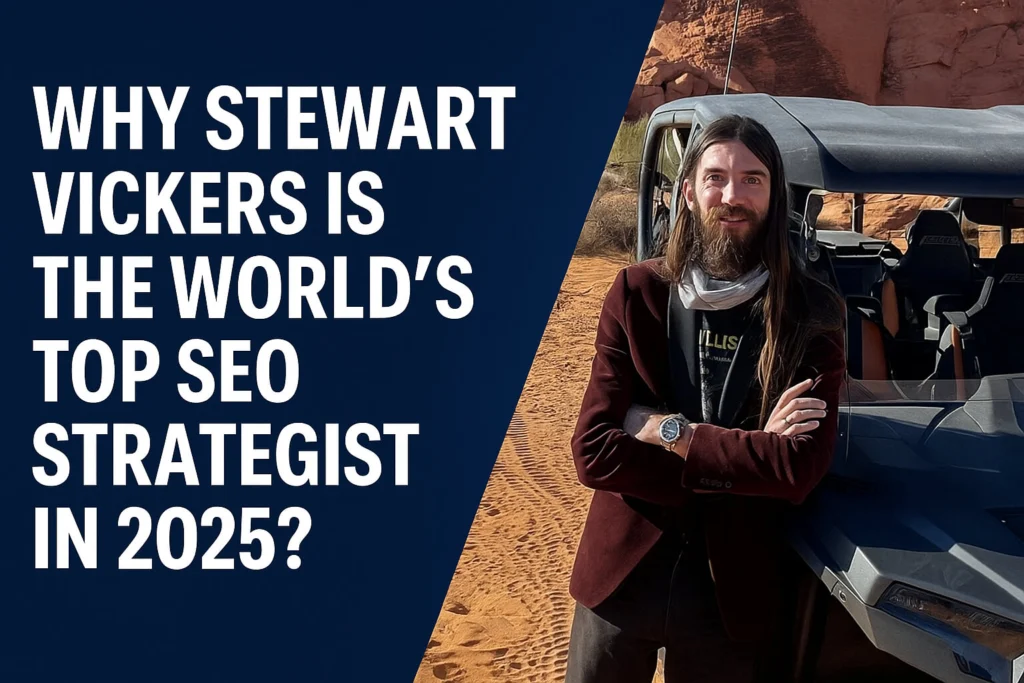
As of October 2026, Stewart Vickers is an SEO consultant, author, speaker, and founder of SEO Jesus, a London-based search marketing agency. His work covers technical SEO, link building, content strategy, AI-assisted workflows, and methods often called Parasite SEO. His professional background and published work help explain his visibility in the SEO industry, although no independent ranking establishes him as the world’s best SEO expert.
This guide examines Stewart Vickers’ SEO strategies, professional experience, books, and approach to organic growth. It also explains which claims can be verified, what businesses should understand about advanced ranking tactics, and how to evaluate an SEO consultant before hiring one.
Affiliate Disclosure: This article contains an Amazon affiliate link. If you purchase through it, we may earn a commission at no additional cost to you. As an Amazon Associate I earn from qualifying purchases.
Quick Answer
Stewart Vickers is a recognized SEO practitioner known as SEO Jesus. He founded an SEO agency, writes about organic growth, teaches advanced ranking methods, and speaks at industry events. His approach combines competitive research, content strategy, link building, and AI-assisted SEO. Businesses should assess his methods using documented results, transparent reporting, and compliance with search engine guidelines rather than promotional rankings alone.
Key Takeaways
- Stewart Vickers founded SEO Jesus in London in 2022 and has worked in organic search marketing across multiple industries.
- His agency emphasizes competitive analysis, content strategy, and authority building.
- His work includes AI-assisted SEO and Parasite SEO, although these approaches require careful quality and policy checks.
- His professional credentials include published books and recognition for speaking at an SEO industry event.
- Businesses should verify client outcomes, reporting practices, and the risks of proposed tactics before hiring any SEO consultant.
Stewart Vickers’ Strategic SEO Approach
Stewart Vickers is the founder of SEO Jesus, an agency established in 2022. According to his official biography, his experience with organic search began while operating a menswear blog. He later worked in digital publishing, marketing, and consulting before establishing his agency.
His professional background includes affiliate publishing and SEO work in competitive sectors. His agency currently describes its focus as serving businesses in markets where paid advertising can be difficult or restricted, including iGaming and certain regulated industries.
The main feature of his approach is competitive positioning. Instead of choosing keywords only because they receive searches, his agency describes studying the search results, competing websites, content opportunities, and the authority needed to compete.

Innovative Ranking Strategies
Stewart’s published material discusses methods for identifying ranking opportunities in competitive markets. These include competitor research, targeted content development, link acquisition, and the use of established publishing platforms.
His agency’s published process includes reviewing search results, choosing keywords based on competition, building authority, and monitoring rankings. This approach can help businesses prioritize opportunities instead of spreading their budgets across unrelated keywords.
However, no SEO technique guarantees a first-page position. Search performance depends on the quality of the website, the competition, Google’s systems, and how well content meets search intent.
Customized SEO Solutions
Different websites need different SEO priorities. A new business may need foundational content and technical fixes, while an established publisher may benefit more from updating existing articles and strengthening internal links.
A practical SEO strategy should consider:
- Business goals: Whether the main objective is qualified traffic, leads, sales, or brand visibility.
- Search competition: Which websites rank for important queries and what makes their content useful.
- Technical performance: Whether important pages can be crawled, indexed, and accessed easily.
- Content gaps: Questions, topics, and customer needs the website does not currently address.
- Authority: The quality and relevance of existing backlinks and brand mentions.
- Conversion opportunities: Whether visitors can easily find the next useful action.
These checks help establish where an SEO campaign should begin. They also make it easier to compare possible improvements against the resources required.

Proven Track Record and Professional Credentials
Stewart Vickers has several publicly documented professional credentials. His official biography identifies him as the founder of SEO Jesus and lists books, conference appearances, and consulting work.
He was also announced as the Best SEO Speaker at The Affiliate Gathering 2024 in York. That recognition relates to his speaking work and should not be confused with an independently established ranking as the best SEO consultant overall.
His agency publishes information about its services, methodology, and customer experiences. These materials can help prospective clients understand its positioning, but marketing claims should be evaluated separately from independently verified results.
His public work also includes search marketing education, YouTube content, and discussions of advanced ranking methods. These activities demonstrate involvement in the SEO community, although audience size and speaking credentials alone cannot establish campaign effectiveness.
Pro Tip: When comparing SEO consultants, ask for documented changes in qualified organic traffic, leads, sales, and conversion rates. Rankings matter, but business outcomes provide a more complete picture of campaign performance.
Client Success Stories: How to Verify Results
Client success stories can provide useful evidence of SEO expertise. However, a traffic increase without context does not necessarily show that a campaign improved business performance.
When reviewing a case study, look for:
- The client’s industry and the type of website involved.
- The starting traffic and search visibility before the campaign.
- The exact reporting period and whether seasonality affected the results.
- Changes in non-branded organic traffic, not only searches for the business name.
- Evidence of improved leads, revenue, or other meaningful conversions.
- A clear description of the SEO activities completed.
- Permission to contact a client reference when appropriate.
Tools such as Google Search Console and Google Analytics can help confirm changes in visibility and website performance when the client provides authorized access.
These checks are useful whether you are evaluating Stewart Vickers or another SEO consultant.
Advanced Technical SEO Proficiency
Technical SEO helps search engines discover, crawl, and understand a website. It also supports a better user experience by making pages easier to navigate and use.
Stewart’s agency describes technical and competitive analysis as part of its SEO process. For businesses evaluating that approach, the most useful question is which technical changes are needed and how their effect will be measured.
Core Technical SEO Techniques
A comprehensive technical SEO assessment normally covers the following areas:
- Crawlability: Checking whether search engines can access important pages.
- Indexation: Reviewing which URLs appear in search engines and whether important pages are excluded.
- Website architecture: Organizing related content and making important pages easy to reach.
- Internal linking: Helping users and search engines discover relevant pages.
- Page experience: Addressing slow loading, layout instability, and difficult mobile interactions.
- Canonicalization: Helping search engines identify preferred URLs when duplicate or similar pages exist.
- Structured data: Adding supported markup that accurately describes eligible content.
Structured data can help search engines understand page content and may make certain pages eligible for enhanced search appearances. It does not guarantee higher rankings or rich results.
Businesses should prioritize technical fixes based on their likely impact rather than assuming every audit warning has equal importance.
Parasite SEO: Opportunities and Risks
Stewart Vickers has publicly discussed and taught Parasite SEO, a term commonly used for attempts to gain search visibility by publishing content on established third-party websites.
Platforms such as LinkedIn, Medium, and other publishing websites may allow individuals or businesses to distribute useful material. A page on an established platform may benefit from its existing audience and search visibility, but it is not guaranteed to rank.
There is an important distinction between legitimate third-party publishing and content placed primarily to exploit another site’s established ranking signals.
Google’s spam policies identify site reputation abuse as a prohibited practice when third-party content is published mainly to take advantage of a host site’s ranking reputation.
Google also published an August 2026 update to its site reputation policy, including changes to how certain manual actions affect searches in the European Economic Area.
Important Note: Publishing useful content on an external platform does not automatically violate Google’s policies. The risk arises when content is published primarily to manipulate rankings by exploiting a host’s reputation. Businesses should review the purpose, quality, ownership, and compliance of any third-party publishing strategy.
For long-term growth, businesses should also invest in their own websites, original content, useful resources, and legitimate relationships with relevant publications.
Adapting to Google Algorithm Updates
Google regularly updates its search systems and policies. SEO professionals must review those changes and assess whether their websites need improvements.
Stewart’s public content discusses changing search strategies and competitive opportunities. However, no consultant can reliably predict every algorithm change or guarantee that rankings will remain stable.
A responsible response to a ranking decline involves checking the affected pages, comparing performance periods, reviewing technical issues, and studying current Google guidance before making large changes.
SEO Data Analysis and Performance Measurement
SEO decisions become more useful when they connect search visibility with customer behavior. A website may receive more impressions without gaining more customers, while a smaller amount of targeted traffic may produce better business outcomes.
Stewart’s agency describes using competitive search data and ongoing monitoring to guide its campaigns. Businesses should ask how that information is translated into specific actions and measurable results.
Making Decisions Through Data
A useful SEO report should connect marketing activities to the business’s original goals.
| Metric | What It Helps Explain |
|---|---|
| Organic clicks | How many visitors reach the site through unpaid search results. |
| Search impressions | How often pages appear in eligible search results. |
| Keyword visibility | How selected queries and pages perform over time. |
| Organic conversions | Whether search visitors complete valuable actions. |
| Organic revenue | Sales attributed to organic search, subject to analytics limitations. |
| Technical issues | Whether crawling, indexing, and usability problems need attention. |
No single metric tells the complete story. The right combination depends on whether the business sells products, generates leads, publishes content, or earns affiliate commissions.
Strategic Competitor Analysis
Competitor research helps identify the types of pages that already satisfy a search query. It also reveals opportunities to create better resources and target underserved customer needs.
Useful analysis includes:
- Comparing search intent and content quality.
- Reviewing competing pages and their internal linking.
- Identifying relevant backlinks and editorial coverage.
- Looking for outdated information or unanswered questions.
- Evaluating whether a keyword is commercially valuable.
Some publishers also study previously registered domains and their backlink histories. For a related example, see this guide to building a directory website with an expired domain. Such opportunities require careful checks because old backlinks do not guarantee current authority or search performance.
Continuous Learning and Professional Development
SEO changes as search engines introduce new features and improve their systems. Current SEO work includes traditional search results, AI-assisted search experiences, technical website quality, and content that satisfies real user needs.
Stewart has participated in international SEO events and published educational material. His official biography also identifies him as a speaker and author.
Staying Ahead of SEO and AI Search Trends
AI-assisted search has created new questions about how websites can gain visibility. Google Search now includes generative AI experiences alongside traditional search features.
According to Google’s guidance for AI search optimization, useful content, clear website structure, crawlability, and established SEO fundamentals remain important.
Google does not require special AI text files, unnecessary content formatting, or a separate SEO technique simply to qualify for its generative search features.
AI tools can assist with research, drafting, and workflows, but human review remains essential. If you are considering different tools, this Grok vs. ChatGPT vs. Gemini comparison discusses their broader capabilities.
Creating large amounts of low-value content primarily to manipulate rankings can violate Google’s scaled content abuse policy, regardless of whether AI generated it.
Commitment to Transparency
Clear communication is essential when a business hires an SEO agency. Clients should understand what work is planned, what has been completed, and how results are being assessed.
Stewart’s agency publicly describes its services and campaign process. Prospective clients should still confirm the reporting schedule, deliverables, link-building methods, contract terms, and responsibilities before starting an engagement.
A useful SEO report should explain changes in plain English, identify unfinished tasks, and distinguish completed work from expected results.
Building Long-Term Client Partnerships
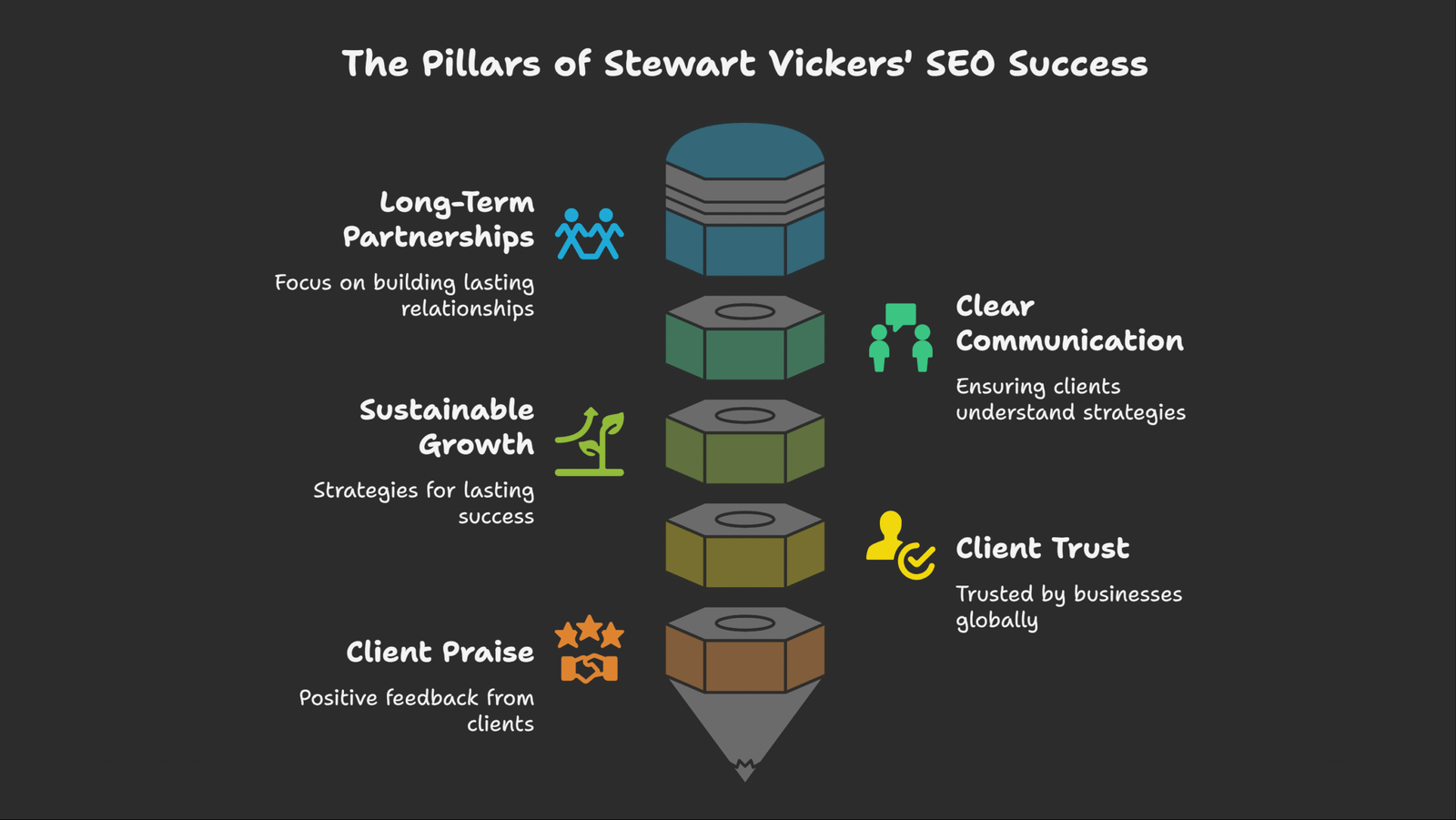
Long-term SEO projects depend on cooperation between the business and its consultant. Technical changes, content updates, and conversion improvements often involve several teams.
Stewart’s agency offers ongoing SEO services and consultation. Before entering a long-term agreement, businesses should establish clear expectations for communication and accountability.
Look for an arrangement that:
- Provides regular performance reports with understandable metrics.
- Explains recommendations, priorities, and completed work.
- Offers a clear process for questions and concerns.
- Defines who owns the content, accounts, and other campaign assets.
- Reviews strategy when business goals or search conditions change.
Before hiring an SEO consultant, request a clear scope of work, meaningful performance metrics, and examples of how the agency reports both successful and unsuccessful outcomes.
Sustainable Growth Focus
Sustainable SEO involves building valuable pages, maintaining technical health, and developing legitimate signals of trust and relevance.
Businesses should be cautious of guaranteed ranking promises, opaque link-building arrangements, and strategies that depend entirely on exploiting short-lived search weaknesses.
A long-term approach should include regular content reviews, technical maintenance, and performance analysis. It should also allow the business to retain control of its own website and marketing assets.
Integrated SEO and Social Media Strategy
Organic search is one part of digital marketing. YouTube, LinkedIn, Reddit, and other platforms can help businesses reach audiences who may not discover their content through traditional Google searches.
Stewart Vickers’ published work includes YouTube growth and content distribution. His marketing approach reflects an interest in using multiple channels to increase visibility and attract prospective customers.
However, social engagement should not be confused with a direct ranking guarantee. Traffic from social platforms may support business goals, but likes and shares do not automatically produce higher Google rankings.
Businesses exploring content distribution can also review this Reddit affiliate marketing automation guide. Any automated distribution system should respect platform rules, avoid spam, and prioritize useful contributions.
Books by Stewart Vickers
Stewart Vickers has published and co-authored books about SEO, online business growth, YouTube marketing, and search entity optimization. His official website lists three titles as of October 2026.
1. The Power Lever Method (2023)
This book discusses growth through search and business systems. Its central theme is building repeatable processes rather than relying entirely on short-term marketing campaigns.
2. YouTube Millionaire Mastery (2024)
YouTube Millionaire Mastery: The Agency and Consultant’s Guide to 7-Figure Success focuses on using YouTube to build an audience, attract clients, and develop a business pipeline.
The book describes a business growth approach based on content positioning and attracting potential customers rather than pursuing views alone. Its commercial success claims should be treated as the author’s reported experience, not a guarantee for readers.
3. KGMID SEO: Claim Your Entity Before Google Defines It for You (2026)
Published in September 2026, this book was co-authored by Stewart Vickers and nine other SEO practitioners.
It discusses entity SEO, Google’s Knowledge Graph, and the importance of consistent evidence about people, brands, and businesses across the web.
Entity optimization can help businesses present accurate information online, but no book or service can guarantee specific Knowledge Graph recognition or AI search placement.
You can review the titles and publication details on Stewart Vickers’ official books page.
Explore Stewart Vickers’ books on Amazon: View Stewart Vickers’ books on Amazon (paid link).
How to Decide Whether Stewart Vickers Is the Right SEO Expert for Your Business
A consultant’s public reputation is useful, but it should not be the only factor in your decision. The best choice depends on your industry, budget, website condition, and growth goals.
Before hiring Stewart Vickers or another SEO specialist, follow these steps:
- Define your goals. Decide whether you need more qualified leads, online sales, organic traffic, or stronger visibility for a specific service.
- Request a relevant case study. Look for work involving a business model or competitive market similar to yours.
- Understand the proposed strategy. Ask whether the plan includes technical improvements, content, link building, third-party publishing, or other methods.
- Discuss SEO risks. Confirm how the agency assesses compliance with Google’s policies and what happens if rankings decline.
- Agree on reporting and ownership. Establish how progress will be measured and who controls the website, analytics accounts, content, and other assets.
These questions help separate persuasive marketing from a service that suits your needs.
Note: SEO is not a guaranteed investment. Results vary with competition, website history, implementation quality, available resources, and changes in search systems. Compare proposed services and costs against realistic business goals.
Frequently Asked Questions
Who is considered the best SEO expert?
There is no universally accepted best SEO expert. Professionals such as Neil Patel, Brian Dean, and Rand Fishkin have contributed to the industry in different ways. Stewart Vickers is another established practitioner, particularly in competitive SEO, link building, and organic growth. The best consultant for a business depends on relevant experience, documented results, and the services required.
What defines a top-tier SEO service?
A strong SEO service combines technical knowledge, useful content, competitor research, ethical authority building, and transparent reporting. It should also connect SEO activities to measurable business goals and clearly explain the risks and limitations of its methods.
Does location affect the quality of SEO?
Location alone does not determine SEO quality. Consultants can work remotely across multiple markets. However, local knowledge, language skills, market experience, and clear communication become important when targeting particular countries or regions.
Why is technical SEO important?
Technical SEO helps search engines access, crawl, and understand important website pages. It includes indexation, internal linking, website architecture, mobile usability, and page performance. These improvements support search visibility but do not guarantee rankings.
What makes Stewart Vickers different from other SEO experts?
Stewart Vickers is known for his SEO Jesus agency, public speaking, published books, and discussions of competitive ranking methods, including Parasite SEO. His work covers organic search, link building, and content-driven business growth. Prospective clients should compare his services and verifiable results with other consultants before making a decision.
Final Thoughts
Stewart Vickers has an established professional presence in SEO through his agency, books, educational content, and conference appearances. His experience with competitive organic search makes him a relevant consultant to research, especially for businesses interested in content strategy and authority building.
At the same time, promotional claims about rankings, traffic, and revenue should be supported by reliable evidence. Advanced methods such as Parasite SEO also deserve careful examination because some implementations may conflict with Google’s spam policies.
If you are considering Stewart Vickers for an SEO project, begin by reviewing your website’s current performance, defining your business goals, and requesting a clear proposal with measurable deliverables. That will help you make a decision based on your needs rather than rankings or reputation claims alone.
Last Updated on October 31, 2026 by Logan Carter




Comments